
More Coverage
SAR application
Delivering more data larger strips can be captured in a single pass. Agile steering enables the satellite to continuously adjust its orientation, scanning wider swaths of terrain without needing multiple orbits.

Mission Details
1 Pass
200 Kg Weight class
150 Kg·m² Inertia
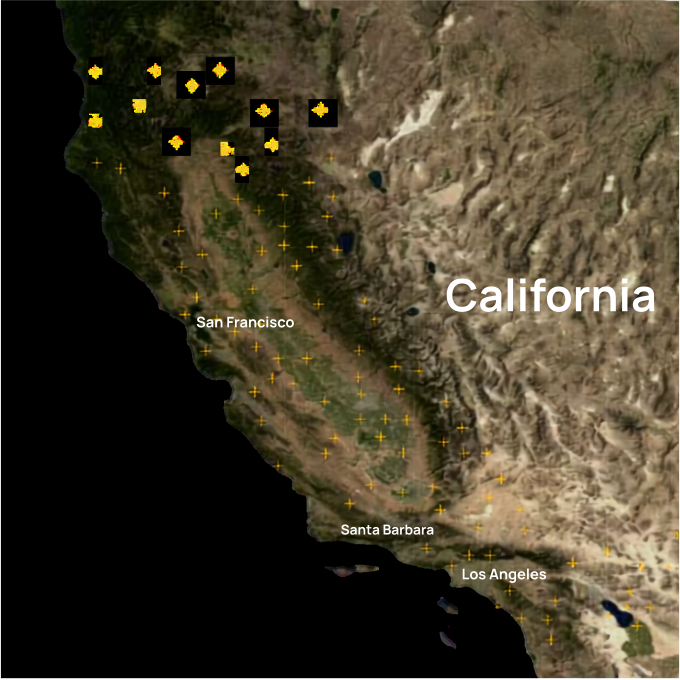
39 Targets
Comparison between CMG & Reaction wheel
8 targets
HOW IT WORKS
Continuous Strip Collection
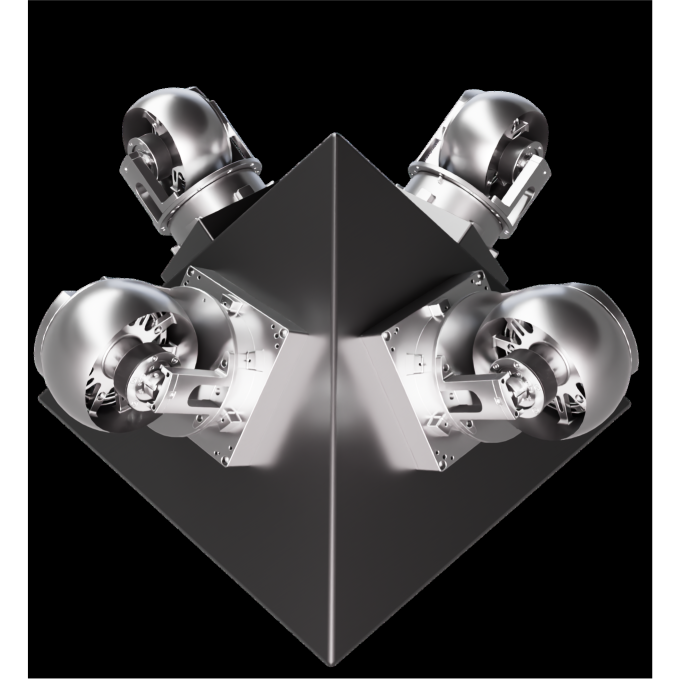
Rapid slew focus on every target. A Rooftop Mini-CMG cluster gives this 200 kg-class SAR satellite (≈150kg·m² inertia) the control authority to re-orient at several degrees per second acquiring target further away in only 1 pass
Attitude Control Solution
Two attitude-control options were sized for this satellite. The Rooftop Mini-CMG cluster favors torque about a single axis, which is beneficial for a SAR satellite given its large inertia about the pitch axis.
For the comparison, a mini-CMG of 2.8 Nms and a reaction wheel of 4 Nms were used.
Recommended
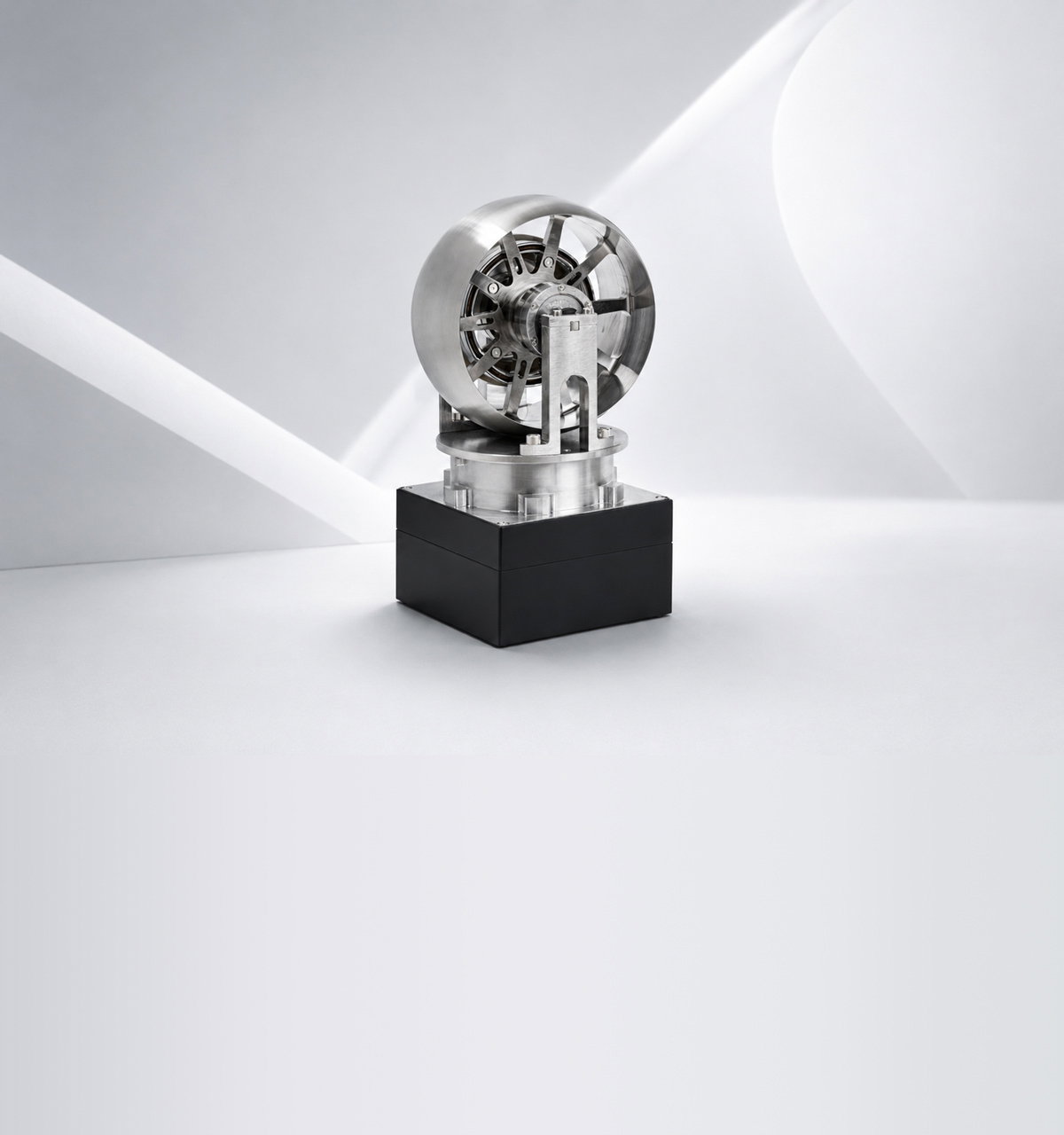
Roof Top miniCMG
4 x miniCMG
Angular Momentum
9.2, 11.2, 6.5 Nms
Torque
14.4, 17.6, 10.1 Nm
Mass
13 Kg
Max Power
80 W
Pyramid RW
4 x Reaction Wheel
Angular Momentum
6.9, 6.9, 8 Nms
Torque
0.5, 0.5, 0.6 Nm
Mass
12 Kg
Max Power
800 W
Orbit & Target Selection
The satellite considered in this use case is placed on a polar orbit with the following properties:
Properties | Value |
Orbit Height | 600 Km |
| Inclination | 97.6 deg |
| LTAN | 10.30 |
| Repeating Ground Track | 15 Orbit |
| Period | 96 Min |
| Sensor's Swath On Ground | 10 Km |
THE PHYSICS BEHIND IT
Torque is only half of it
The secret of performing such higher improvement versus reaction wheel is mainly due to the highest torque capability. Although it must be coupled with a robust steering algorithm to efficiently map the required torque commands into actuator commands.
Jerk limited Profile
Veo Steering Logic
REQUEST YOU MISSION ANALYSIS
RECOMMENDED PRODUCTS
Products for this use case
Traditional reaction wheel-based satellites are limited to narrow imaging strips of approximately 10 km. With Veoware CMG-based steering, the satellite can rapidly slew between adjacent strips during a single pass, dramatically increasing the area covered per orbit. This reduces revisit time and lowers the cost per square kilometer of imagery.